


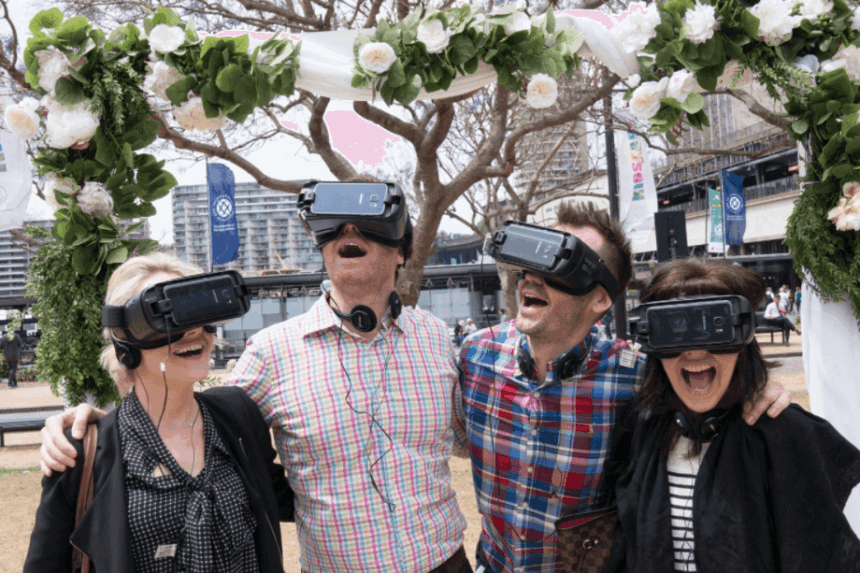
The only way to attend a gay wedding in Australia is with VR.
“What a sad era when it is easier to smash an atom than a prejudice.”
―Albert Einstein
We live in an age of unparalleled innovation. Yet for every step forward in that arena we sadly seem to be moving two steps back when it comes to acceptance and tolerance for the queer-identified.
The good news is that many people are using the aforementioned technological innovation to circumvent bigotry and perhaps, someday soon, even defeat it altogether.
VR in the fight for gay marriage in Australia
Right now Australia is facing a dilemma: to allow gay marriage or join so many other countries in denying basic human rights to its citizens.
As the debate rages, a group of activists has created a special place where people can see that gay marriage is not just fair but also beautiful: a place in virtual reality.
Speaking to The Next Web, Giles Clayton of Virtual Equality described the project as a way for “Aussies to get the chance to experience something they can’t right now and hopefully change perspectives about the fear of legalizing same-sex marriage.”
On the hardware and funding sides of things were two Australian advertising heavyweight agencies: Luscious International, and J. Walter Thompson.
But first Virtual Equality needed to find a queer couple willing to take part in the project.
Fortunately, the lovely Dan Thurston and Thomas Crow agreed to participate. First, they had their wedding ceremony in New Zealand, where gay marriage is legal, which was recorded with virtual reality cameras.
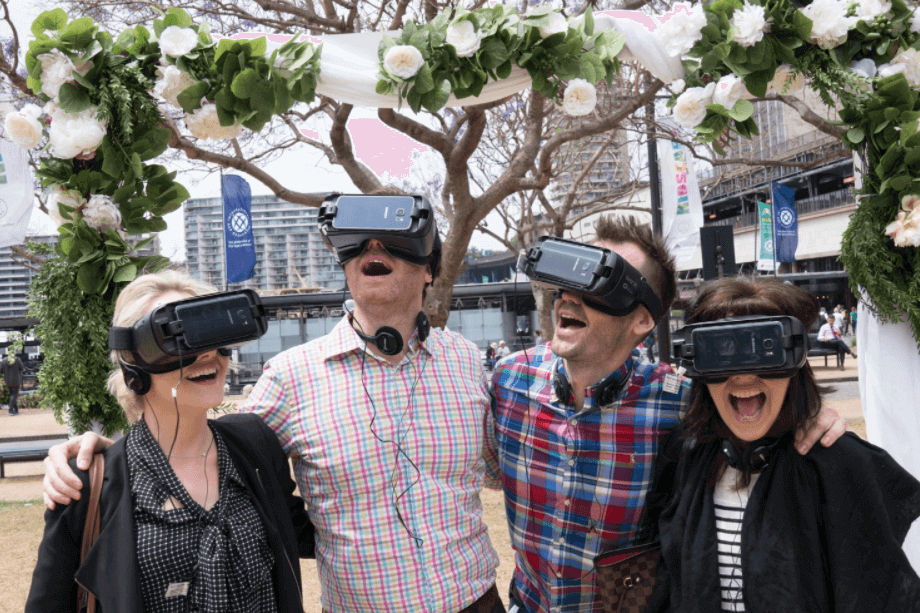
Then the footage was played back to “guests” in Australia who wore VR headgear—allowing them to experience the event as if they were right there with the couple.
“I hope that, in seeing us as a positive model for marriage, Australians can see that marriage equality is a no-brainer and any debate about such basic human rights is dumb,” Thurston said to The Next Web.
New South Wales Legislative Assembly member Jenny Leong added, “It’s bizarre that in Australia we can only experience a same-sex marriage through virtual reality… Love is personal but should be inclusive of everyone and this is why we need to change the ban on same-sex marriage.”
An empathy machine?
The work of Virtual Equality in Australia demonstrates the potential power of social change through virtual reality.
Already being used to treat everything from phobias to help stroke victims recover—and now helping to deal with homophobia—it’s easy to see this kind of technology being a therapeutic tool in creating a sense of empathy.
After all, with VR anyone can experience both the pleasures and challenges of any person or group of people, making it hard to hold onto irrational prejudices when they’ve almost literally seen the world through their eyes.
The future of love and sex
Here’s to a dream that someday we will be living in a world as advanced in human rights, tolerance, and acceptance as it is in technological developments.
Until that time comes, though, we can only hope that projects like Virtual Equality will keep using tech innovation to educate and even enlighten.
Image sources: Jonathon May/Virtual Equality