


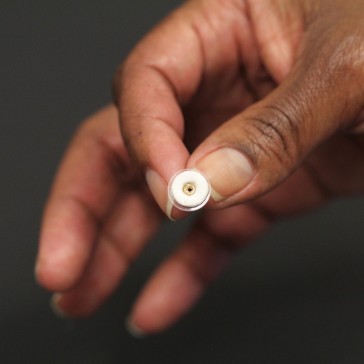
Birth control never looked so good.
Way back in 1896, architect Louis Sullivan expressed the idea that what something does should be the driving force in what it looks like.
The thing, though, about “form follows function” is that sometimes the function—whether it be architecture, engineering, or anything else—forgets that the function has to involve the wonderfully messy, if not completely eccentric, nature of human beings.
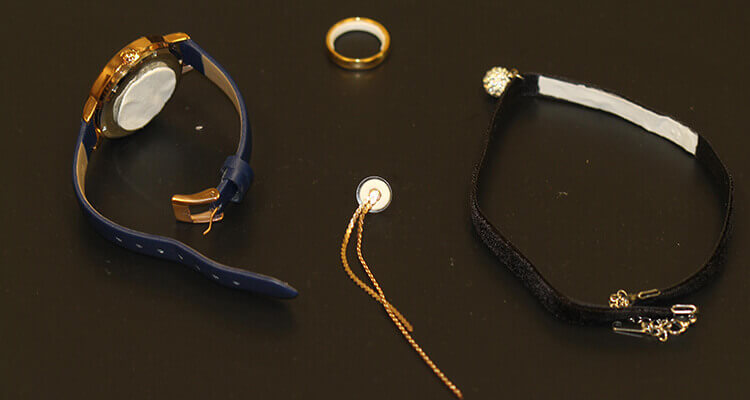
Jewelry as birth control
But Mark Prausnitz and his fellow researchers at the Georgia Institute of Technology found a way to combine the function of birth control with an effective form—while making the solution absolutely lovely and stylish.
In a press release, Prausnitz explained why they specifically chose to provide doses of contraceptive hormones via jewelry pieces:
“Because putting on jewelry may already be part of a woman’s daily routine, this technique may facilitate compliance with the drug regimen. The more contraceptive options that are available, the more likely it is that the needs of individual women can be met.”
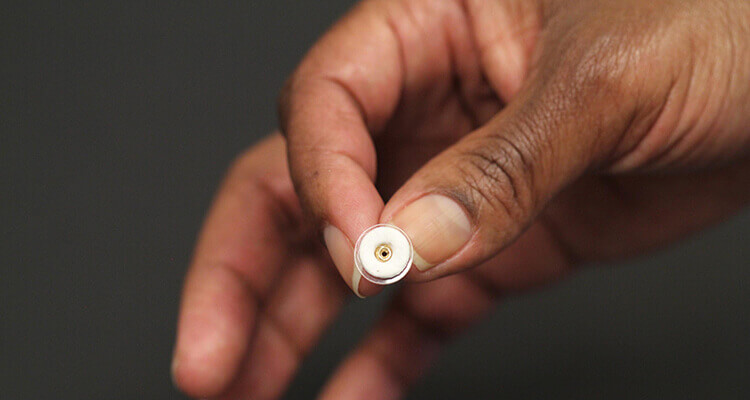
Made up of a series of layers—one that adheres to the specially designed jewelry, a second that’s attached to the wearer’s skin, and a third that carries the medication—the design takes the idea of birth control patches and combines it with an aesthetically pleasing delivery system.
Focus on earrings
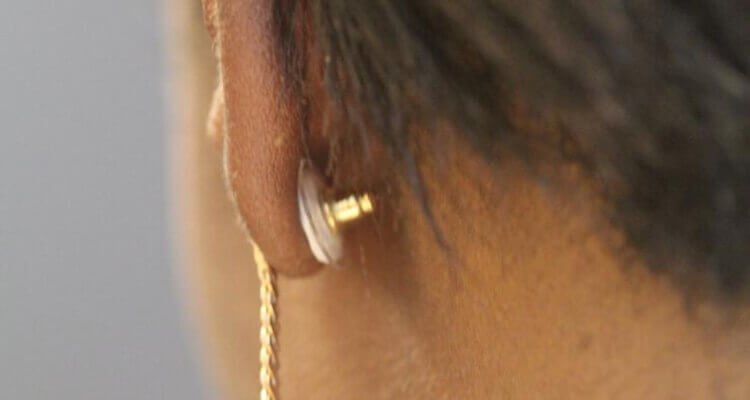
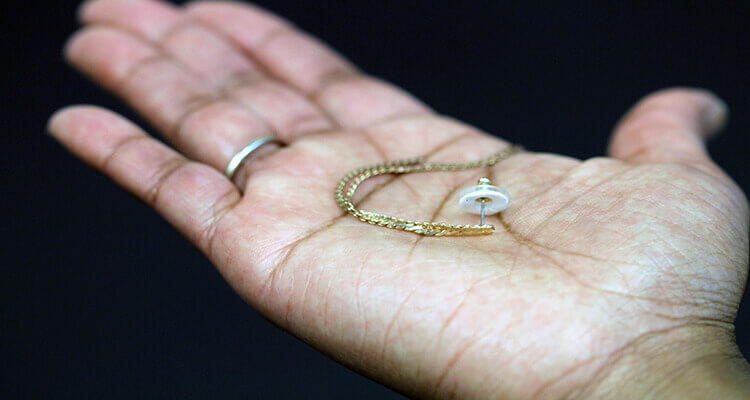
While other forms of jewelry were considered, Prausnitz, working with Laura O’Farrell and Mohammad Mofidfar, determined that earrings were the best option.
“The advantage of incorporating contraceptive hormone into a universal earring back is that it can be paired with many different earrings,” Prausnitz added.
“A woman could acquire these drug-loaded earring backs and then use them with various earrings she might want to wear.”
Though no human trials have been conducted, the team published a report on its work in the Journal of Controlled Release in March.
The team added that the contraceptive jewelry could especially benefit people who don’t have regular access to long-term birth control.
More importantly, Prausnitz acknowledged that the system is worthless if it’s something that people just won’t use.
“We would have to make sure that this contraceptive jewelry concept is something that women would actually want and use.”
Jewelry is for everyone
While Prausnitz and his team should be acknowledged as developing a unique and possibly very effective way of delivering birth control to people who find taking regular doses difficult or are living in countries where long term options are hard to come by, their focus is remarkably sexist.
The fact is, making slow-release birth control available in attractive packages is something that would benefit everyone—not just Prausnitz’s concept of femininity.
Earrings can, after all, be worn by anyone of every conceivable gender. Besides, playing with their concept doesn’t take a massive amount of imagination to see it being included in rings, wrist bands, anklets, and even body piercings.
It might even be possible to integrate it not just into things we wear on our bodies but into our clothing as well: a bra, for instance, or underwear where medications are delivered through carefully selected points where skin meets fabric.
As technology advances, it might even be possible to embed microelectronics as well as the needed birth control medication to remind the wearer that it’s time to recharge or replenish their dosages.
There’s even the possibility that the same kind of device could be integrated into something like a smartwatch. This supposed gadget would not just monitor the user’s health and sexual activity, but also deliver kinds medications—such as anti-anxiety, hormones, and chemicals for sexual enhancement, as well as birth control dosages—as needed.
Form, function, and people
While the function of a device should always be included in its form, it’s also true that both are useless if people won’t use them.
Though the team’s work might be limited by narrow views of gender, Prausnitz and other researchers could very well have opened a door to a future where sexual health and birth control could be as easy as putting on an earring, or slipping on a watch—no matter a person’s sex or gender.
Image sources: Georgia Institute of Technology