


Perhaps the question is too broad and complex for software to handle.

It sounds like a high-tech oxymoron: a smartphone app for which the goal is not to foster social media connections, but instead reward people for getting together in the real world.
But the developers of the Bthere app don’t stop there. In addition to their aim to move people away from their devices and keyboards, they’ve created the app to help keep people safe and protected from sexual assault.
It’s all about connections
Available for Apple as well as Android smartphones, Bthere describes itself as a way for people to, “Earn real-world prizes just for hanging out with your friends.”
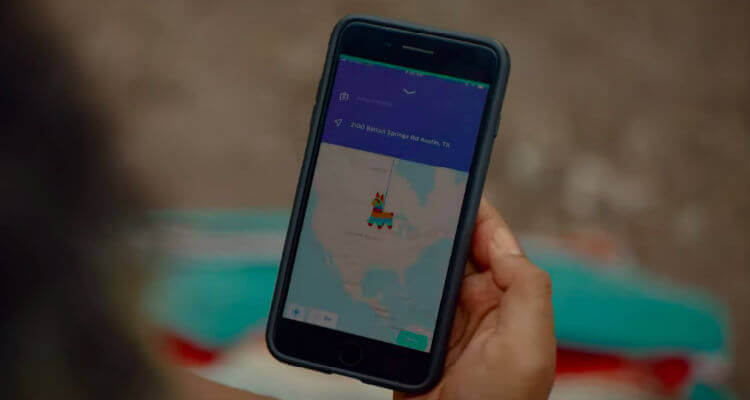
The way it works is pretty simple: just download it, name your social circle, and then—through the app accessing your contacts—begin to put together groups of your nearby friends.
After friends accept your invitation to join, you can then communicate with the circle en masse by dropping a piñata—the app’s way of sending out a call for everyone to get together.
If you do get together in real life, you can gain points that can be used to purchase items from Bthere’s in-app shop.
Talking to Markets Insider, Btehre CEO and founder Ben Johanson explained his goal was to help facilitate social connections, not simply digital interactions.
We want to help transform technology back into just the tool that brings us together in person by making it easier to stay connected, not the place we spend most of our time. The more that humans are inspired and enabled to connect with each other and understand each other in real life, the more kind and empathetic our world can be.
This has certainly struck a chord with many, as the app seems to be on its way to becoming pretty popular, with 100,000 users having to date signed up and with around 20,000 regular users.
Then there are Bthere’s safety features.
In addition to a “got home safe” update, the app has a sort-of emergency button that, when activated, can send out an alert to your circle.
This is where we segway into how the Bthere app, or others like it in the future, might serve as useful tools in helping people stay sexually safe as well as social.
A way to call for help?
According to the same article, Johanson’s motivation to create Bthere wasn’t completely monetary: after someone close to him had experienced a sexual assault he tried to create a way to get people away from their digital lives and to get more into connecting physically.
Not to dismiss his motivation—or the good that Bthere has done or could do in the future—but this selling-point seems almost shallow: an afterthought all-but buried behind what’s pretty much another social media app, albeit one that gives kudos for meeting up in the real world.
After all, while it might give people a feeling of being safe to let friends or such know where you are, or if you need help, something like this can be done just as easily without the app.
It’s even truer in an emergency situation when someone calling for help might have crucial responses delayed because the call went out to friends rather than to police or medical services.
In fact, and here we get to be a bit callous ourselves, it might even be counter-productive: giving the user a false sense of security and thus possibly making them more willing to engage in more risky behavior.
A positive idea?

We’ve talked many times here at Future of Sex about using smartphone apps as a way of possibly protecting, or reporting, instances of sexual assault and no doubt will do so in the future. It tragically remains the largest sign that humanity has so very far to go in developing social and empathic consciousness in regards to consent and sex.
But Bthere does bring up a rather unique take on it, albeit somewhat tangentially. The whole idea behind the app is, after all, getting people to connect away from virtual platforms and social media sites, and thus add humanity to what often feels like an artificial world of likes and shares.
Perhaps, sometime in the future, we’ll find ways through descendants of apps like Bthere to help bridge the gap between people online being seen as distant abstract characters versus actual, living human beings.
Will this give us enough empathy to do the same in regards to sex, to view people not just as sexual objects but as persons deserving of respect and sensitivity?
Perhaps, especially when it might also be coupled with technologies like virtual and augmented reality that could give us important tools to see the world through someone else’s perspective.
Until then, while it’s worth acknowledging attempts of developers like those behind Bthere to at least address the subject, it’s much more important to accept the fact that a true solution will have to be a vast and comprehensive social one. Empathy is not something that will be solely flipped from off to on technologically.
To be blunt about it, we will need to—must—grow up as a species. New tech items from apps to virtual reality will no doubt help in the end.
However, we have to do the deep-down work ourselves or risk creating a future full of sex tech wonders that is also populated by people who see their fellow humans as artificial and disposable as their devices.
Image sources: bthere social