

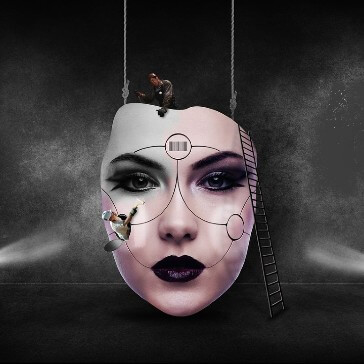
Hyper-sexualized, white gynoids attract just a small portion of the potential sexbot market.

Currently, sex robots only appeal to a fraction of their potential users, as many of the prototypes are white and female. For the industry to grow, sex robot manufacturers need to recognize the importance of representation and diversification.
I believe that one of the most effective ways to create better representation in sex robots, and thus appeal to a larger audience, is to improve diversity on manufacturing teams.
Homogeneous thinking creates blind spots
Issues that arose with the development of self-driving cars exemplify why representation is crucial.
In a recent article, one study found that self-driving cars may prioritize hitting some pedestrians of certain ethnicities (if dodging was unavoidable) because the algorithm was trained to avoid white people over people of color.
One reason put forth for this error: many of the engineers on the AI project were white, and the algorithm was trained on white faces. This issue was not considered because the team lacked people of color.
While this is an extreme example, it does suggest that producers can make glaring omissions in their development should they lack diversity on their team.
Turn to feminist pornography

In a recent paper, John Danaher proposed creating robots inspired by feminist pornography to counter the hyper-sexualized female sex robots that are most often represented today.
He suggested that pornography is often made for men, and thus can be more violent and less pleasing to woman viewers. In comparison, feminist pornography often has female viewership in mind, is more appealing to women, and is often directed and shot by women.
Representation makes a difference
You could view sex robots the same way. With a lack of female representation, the robots will be made with the male consumer in mind.
Manufacturers can create more inclusive robots and a greater variety of options by employing a diverse team of people of different ethnicities, genders, and lived experiences.
As one example, Realbotix, which is advancing the work on sex robots, has a diverse team made up of people from different backgrounds. They are working to create a variety of robots, including male, female and trans robots. While this is undoubtedly good, we can take this argument a step further.
Disability should not preclude use

In a recent paper, a team of researchers stated the explicit need and interest for sex robots by people with disabilities, as those needs may not be easily met by other humans.
This would require consulting with people who have visible and invisible disabilities at the design and testing stages. Although this might take a significant amount of time and money, it could create greater buy-in from a variety of sources, while ensuring the usability of sex robots for people around the world.
Reduce stigma
It is important for both the creators and users to understand how important it could be to have diversity in the development of sex robots. By increasing the number of users, this may also reduce the stigma toward users of sex robots, and create a massive benefit for the community overall.
Image source: Comfreak, Hao Pan, Elf-Moondance