


Farewell, stiff, clunky movements, and hello, lifelike fluidity!
A pair of unique, humanoid-appearing robots might be on the brink of completely altering how we see—and especially interact—with next-generation artificial companions in the years ahead.
It all has to do with how both the Protoclone V1 and Unitree’s H1 may certainly look less obviously robotic. It’s their far more lifelike movements that actually sets them apart from the rest of their cutting-edge brethren.
While opting for more traditional engineering, though with an innovative twist enabling their H1 to have a surprisingly graceful range of motion, Clone Robotics instead took a page from nature’s book by building the Protoclone V1 from the ground up with over a thousand myofiber artificial muscles.
Like the engineers who designed and built it, the Protoclone V1 is capable of an impressive two hundred degrees of relatively smooth mobility at present. Clone Robotics, a California company with a location in Southern Poland, plans to take pre orders on its more advanced Clone Alpha edition later this year
Simultaneously exciting—and disturbing
New Atlas viewed a recent video of Protoclone V1, hanging in mid-air, demonstrating its disconcertingly jerky movements and dubbed it “a wee bit creepy.”
This is a particularly apt description, especially considering Protoclone V1’s water cooling system, which others have alsolikened to sweating like a real human being.
That aside, The Protoclone V1’s myofiber muscles are absolutely fascinating. New Atlas notes that they are based on pneumatic artificial muscles or PAMs. Every single one of the Protoclone V1s thousand is basically a flexible tube hydraulic fluid is pumped in and out of, which closely mirrors the operation of our biological muscles.
RECOMMENDED READ: Digital Passions: How We Might Join In Sexual Symbiosis with AI
Furture development will include anchoring its myofiber muscle network to a 206 bone polymer skeleton so the next stage Clone Alpha will be self-supporting and walk, jump, hadle objects and a host of other activitieshumans do so easily.
In regards to boasting an artificial nervous system, as it is more precise: another goal is to enable the android to control its muscles with proprioceptive and visual feedback. According to its website, the newer model will also have four depth cameras in its skull and “lightning fast microcontrollers” in its spine, to give it the ability to learn skills and thus mimic how we humans move and interact with the world around us.
Old school—with a twist
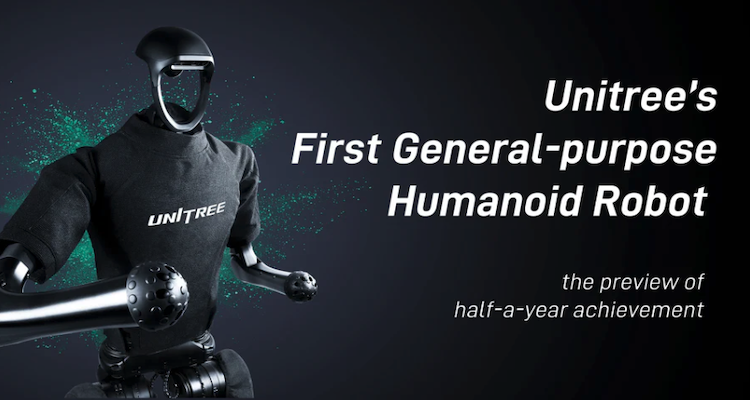
On another, decidedly mechanical hand, the Unitree H1’s developers may have gone a different, not quite so organic-inspired route, but that’s not to say their approach isn’t impressive—or that they couldn’t also someday provide us with lifelike-appearing and behaving artificial companions.
With its 3D Lidar and depth-detecting sensors, high-resolution cameras, numerous high-powered electric motors, lightweight and super-durable frame, and onboard battery, the Unitree H1’s autonomy and record-setting running speed give it a leg up on the Protoclone.
Not only that but if you happen to have a spare hundred thousand or so dollars lying around, you can have your very own Unitree H1 to play with. That said, it is an industrial robot, after all, so you might want to wait until its technology trickles down to the human—not to mention sexually capable—artificial companion manufacturing industry.
With every step—closer and closer
Don’t forget the breakthroughs that have also made our headlines, like the possibility of combining the organic with the inorganic by giving them vat-grown faces, using soft robotics for extra-fluid mobility, building them out of edible materials, or a host of other up-and-coming technologies so they’d have hyper-realistic, super-sensual skins.
Then there’s what could occur when these and other wild new advancements mix, match, merge, or erotically mingle together: companions with cloned-tissue genitals, an indistinguishable-from-human range of movement, modular components for broadening sexual horizons, replicating all of our assorted bodily secretions, or helping us regulate, enhance, or otherwise alter our neural chemistry while also keeping us physically healthy, compliments of a built-in-pharmacology lab.
Agreed, Protoclone remains a work-in-progress, though the company will start taking pre-orders for its far more advanced Clone Alpha later this year, and Unitree’s H1, for all its speed and autonomy, remains a frankly quite intimidating piece of industrial hardware, but both show that despite the lead taken by the rapid development of artificial intelligence, the hardware side of what could be tomorrow’s, fully functional—and I by that I mean truly fully functional—artificial companions could be here sooner rather than later.
Image Sources: Depositphotos, Clone, Unitree