


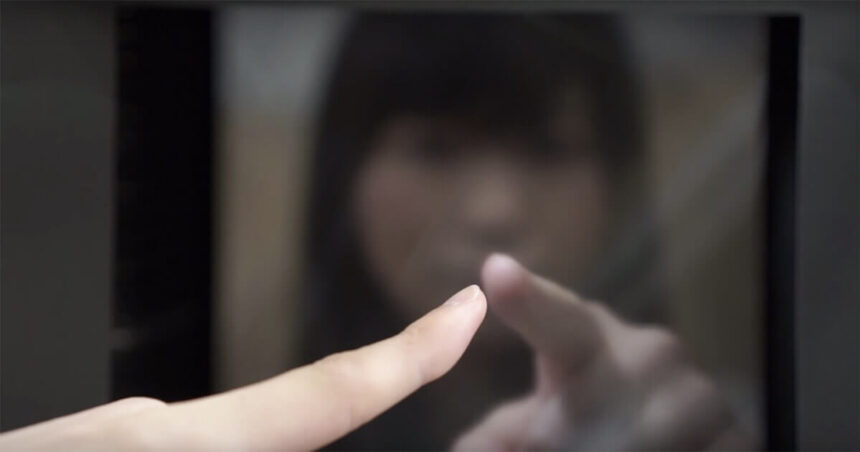
We’re another step closer to making love to touchable light beams.
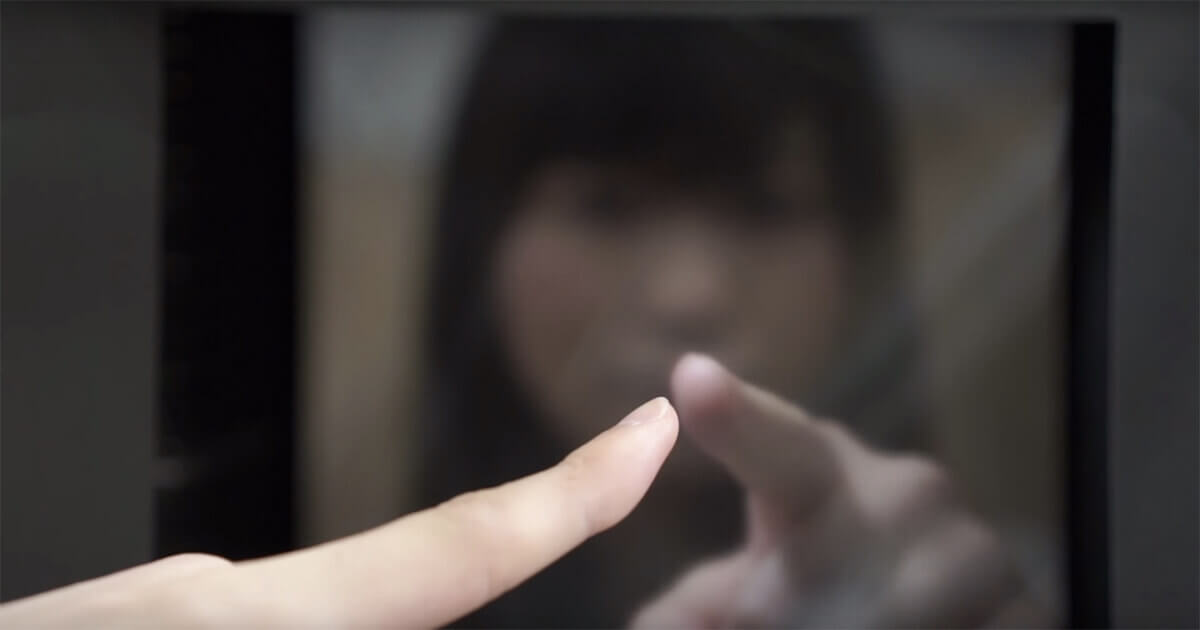
The video chats of tomorrow will extend past two-dimensional images with sound. They will involve 3D interactive holograms that give tactile feedback, allowing you to touch and see the person you are talking to as if they are right there with you.
These advances will have a remarkable effect on the way long-distance lovers have sex online. Right now, teledildonic devices on the market largely focus on genital-to-genital contact. They let you exchange real-time sexual information with smart vibrators and male sex sleeves,
They don’t let you feel your partner stroking your hair or the sensation of their lips upon your skin. That’s why this video demonstration of HaptoClone is so exciting. Created at Shinoda-Makino Lab at the University in Tokyo, the system lets users communicate via physical clones.
To use HaptoClone, each person stands in front of a cube equipped with one aerial imaging plate and four airborne ultrasound tactile displays. When Person A puts their hand in front of their plate, a cloned 3D replica appears in front of Person B, and vice versa.
A Kinect 2 measures contact between the physical and cloned versions of the hands. Then, the tactile displays recreate realistic pressure fields and texture.
Two people can shake hands and give high-fives with tangible holograms!
Alissa Walker at Gizmodo tested out the prototpye at the SIGGRAPH Emerging Technologies exhibition in the United States, calling it the most interesting thing she’d experienced at the event. The publication also predicts its future use during Skype and FaceTime video calls.
Walker’s review of HaptoClone sounds impressive. However, she said it’s not ready for practical application, and it still needs improvement on its physical detail and force to feel truly realistic.
Intimate Cybersex
There are years to go before haptic touch and holograms are seamlessly used in video chats. When this happens, the spatial divide between you and your lover will evaporate.
Many machines around now that deliver haptic touch rely on wearable equipment to record and replicate data. This latest project stands out because there’s nothing to put on. Perhaps more importantly, there are no body parts you will need to cover up.
Some criticism against teledildoincs today is that it’s too focused on pleasuring the penis. With the ability to send manual touch over miles, more people will be satisfied and sexual options will expand greatly. This also opens up the opportunity to send sensations with other body parts and eventually one’s full body. Overall, the experience will be much more convincing—and even personal.
Would you want to use this technology for cybersex?
Featured image source: Shinoda Lab