


Mechanical pleasure over human relationships?
Humans have pretty much always lusted after their creations—just look at the myth of Pygmalion—but, what with recent developments in mechanical engineering and artificial intelligence, it may be sooner rather than later that people will actually be able to sleep with robots.
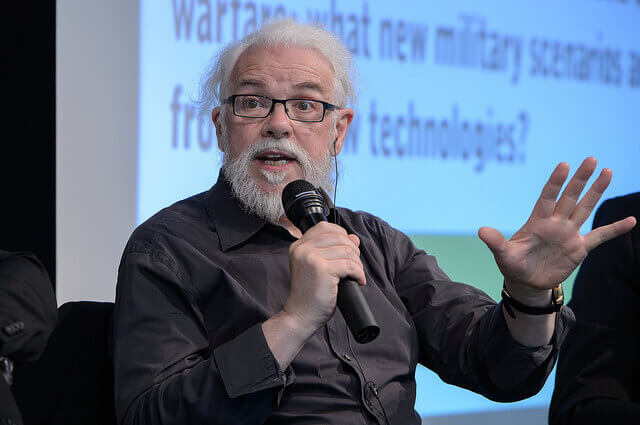
And this has Noel Sharkey rather worried— when it comes to that very first time.
A Professor of Artificial Intelligence and Robotics at Sheffield University, Sharkey has been vocal about his concerns that robot pleasure, especially for someone not experienced with human intimacy, can’t be a truly rewarding experience.
Speaking to The Telegraph, Sharkey said, “I do worry about people bonding and possibly having a relationship what is essentially a box full of computers.”
Continuing, he added that when the loss of virginity is involved, “What are you going to think of the opposite sex then? What would they think a woman or a man actually is?”
A founding member of Responsible Robotics (“a not-for-profit organization founded on the belief that robots are only as responsible as the humans who build and use them and it is they who are accountable”), Sharkey does say that he likes robots—though perhaps not in that way.
“I love robots and I want to see them doing well. But we’ve got to think about what we actually want from them.”
The march of the love machines
While Sharkey might be pessimistic about the idea of people’s first sexual activity occurring with something distinctly inhuman, others predict this scenario will be possible fairly soon
Futurist Ian Pearson, who has made quite the name for himself predicting upcoming trends, says that the first steps toward human-artificial intelligence relationships and sex will begin in the home. “It is likely people will form relationships with these household robots and it is inevitable then that they will have sex with them too,” he said.
Pearson made headlines when he authored a report for Bondara [NSFW], an adult product retailer, saying that artificial intelligence-equipped robots could “offer a customisable personality with only the emotional baggage you want” and thereby be “perfect for those people who want to live their ultimate fantasy without all the strings and emotional commitments of real relationships.”
Which would seem to be exactly what Professor Sharkey is frightened of.
But should we be scared of the future?
While caution is always a good thing—especially when we’re talking about the development of true artificial intelligence—some of Sharkey’s statements have been possibly over-cautious.
“What I want to see is some more international joined-up thinking about what we actually want from robotics, rather than letting it take over like the internet took over,” he told The Telegraph.
And yet, for many, the user-created aspect of the Internet is just what has turned it from a government resource into an endless resource for knowledge and self-exploration— especially when it comes to sexuality.
Putting aside the Internet, though, an important consideration to keep in mind when it comes to robotic sex is the expanding definition of what sex actually is. We’ve already seen people expanding the idea of what erotic pleasure—and intimacy—can be by creating relationships with dolls.
To say that these people do not have happy and satisfying sexual and emotional relationships is to have an extremely narrow view of human intimacy, and to ignore possible future changes to how we might love and live.
But what happens, then, when we actually can create robotic companions that not only look human but can act human? Will it be the crippling blow to society that Sharkey envisions or the supplanting of human relationships that Pearson envisions?
But couldn’t there be a middle ground between these two experts on the future of robotics and human sexuality?
They’ll be what we’ll make them be
Going back to the idea of people losing their virginities to robots, why is that such a bad thing? Far too many people have had, to put it mildly, pretty traumatic first times. Wouldn’t it be better to have a first sexual experience that is with a partner—albeit an artificial one—that would be patient, caring, supportive, and emotionally conscientious?

This sexual partner would be programmed to actually assist people in entering human sexuality—not supplanting it, as Pearson seems to prefer and Sharkey dreads. These robotic lovers could act like therapists: able to process what is happening, what needs to happen, and then how to guide its user into a lifetime of happy, satisfying, and emotionally enriching sexuality.
Sure, some people may prefer to be involved with an artificial lover. So what’s wrong with that? If that is their preference then they should be allowed to live their lives according to their desires, both physically and emotionally.
And what of Pearson’s vision that this choice will not just be an option, but may very well be supplanting human-on-human interaction by 2050? While it’s easy to think that the programmable allure of robots might be so strong as to make regular, old human sex less than appealing, it’s also worth keeping in mind how technology has changed humanity—and how it hasn’t.
Bringing back the Internet, arguably one of the greatest technological changes humans have ever experienced, it hasn’t replaced books, going to the movies, taking long walks, cooking lovely meals, holding hands, or sex. Instead, it has given people countless new ways of learning about the world and of sharing experiences.
Having realistic artificially intelligent robot sex partners may very well change the world just as much as the Internet has, but without a doubt there’ll always be people who prefer to share their sexuality with those of flesh and blood.
A first time for humanity
While Pearson might see a world where people have become so enamored with their programmed relationships that it becomes the norm, and Sharkey might fear a time when “boxes of computers” replace human intimacy, we can instead try to see a world where robots can lead people into having great sex lives—with other people or not.
More importantly, let’s hope for a future where we’ll develop the emotional maturity to allow people to love whoeve—and even whatever—they desire.
Image Sources: Heinrich-Böll-Stiftung, Dave Koi