


The possible evolution of synthetic love.
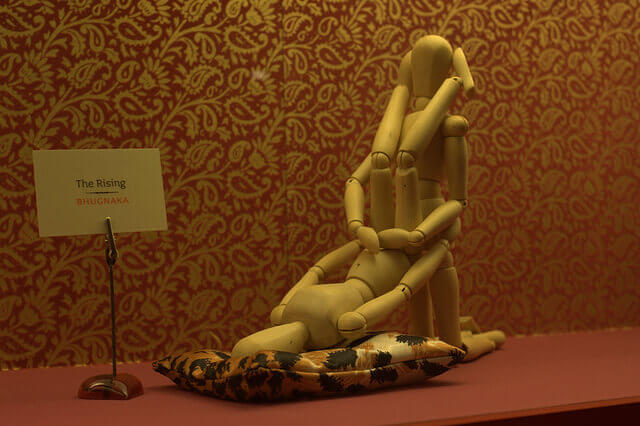
Humans have always found a wide range of things, to put it politely, to be alluring. It’s easy to imagine some early hominid looking at the very first wheel and thinking hello there, sexy…
Flippancy aside, with the arrival of groundbreaking technological innovations, we’re also seeing the emergence of new forms of sexual arousal—not to mention hints of what in the future may humans may find exciting.
And, as we’ll see, the growing acceptance of no excitement at all.
Your plastic pal who’s fun to be with
The featured player in Ovid’s ancient Greek poem, Pygmalion certainly understood the allure of the artificial, falling in love as he did with a sculpture he’d created.
Fast forward just a few thousand years and we are really beginning to see the emergence of what some aficionados call iDollators: people who’ve developed sexual and emotional connections with their artificial companions.
By the way, while human and artificial may sound like a pairing enabled only recently by developments in manufacturing techniques between Pygmalion’s time and our own, keep in mind that sex dolls have a long and interesting history. The earliest manufactured model appeared as early as 1908.
“It actually didn’t take me too long to regard Shi-chan as a synthetic person, and not simply a thing; it occurred pretty much when I opened her crate for the first time. I was immediately stunned by her lifelike beauty, and after I mentally collected myself, extracted her from her crate, and sat her down on the couch, I just held her in my arms for a while. It felt so right and natural, if you’ll pardon the pun. It seemed perfectly normal for me to treat something that resembles an organic woman the same way I’d treat an actual organic woman,” says Davecat, a self-identified iDollator, speaking to The Atlantic.
Not to take away from the sexuality of people like Davecat but, on the surface at least, finding one of these new artificial sexual devices exciting is far from unfathomable. As techniques improve, it’s becoming more and more difficult to tell skin and bones from plastic and metal—at least at first glance.
For those who are aroused by more of the artificial-looking than the natural-appearing, a term often used is technosexual or ASFR (from old days of newsgroups: alt.sex.fetish.robots).
As being attracted to robots and artificial humans is seemingly gaining momentum, it’s not difficult to speculate this forward a few years. More than likely we’ll see people being more open about their sexual preference for their plastic and silicone companions—with, hopefully, society at large accepting their choice of partner.
And, as artificial intelligence research progresses, no doubt we’ll see software matching the hardware. And that’s when things will get real interesting.
“I’m different from you. This doesn’t make me love you any less”
Spike Jonze’s 2013 film Her—while having more than a few faults—does speculate intriguingly on what may very well occur once we have made serious breakthroughs in artificial intelligence.
In the film, Joaquin Phoenix develops a romantic, and even sexual, relationship with an operating system named Samantha.
This is actually a pretty old trope, maybe even as old as Pygmalion: people falling for someone they only know through letters, the phone or-—these days—email, chat, or text.
That Joaquin’s character falls for Samantha isn’t the most interesting part of Her. What does show a very good possibility for the not-too-distant-future is the way a community of fellow operating system lovers forms. Rather than being seen as a deviant, in a few poignant scenes he shyly admits his feelings expecting negativity and instead finds many others share his chosen sexuality.
While we may not have that level of technology, it is without a doubt that very soon we’ll have people who prefer to have emotional, and even sexual, relationships with artificial intelligences.
 |
If you find yourself shaking your head in doubt, just glance back a few paragraphs. Many people, from all walks of life and all around the world, communicate with and are emotionally attached to people they only know through email, chats, texts, and the like. The question then I have to ask: do you know that they are human or a construct like Samantha?
The legendary test for artificial intelligences is called the Turing Test (for early computer genius Alan Turing). Basically, it says that when you can’t tell you are chatting with a program and not an actual human being then, ta da,that artificial intelligence has passed the test.
While we may not be there right now we are getting very close. It’s simply a matter of time before many elements in Her go from speculation to social acceptance of this form of sexuality.
In our next installment, we’ll explore the possibilities of a future beyond the old ideas of gender—as well as embracing a life without sex at all.
Image sources: Lauri Väin, poppet with a camera