


A PR stunt or serious new technological twist?
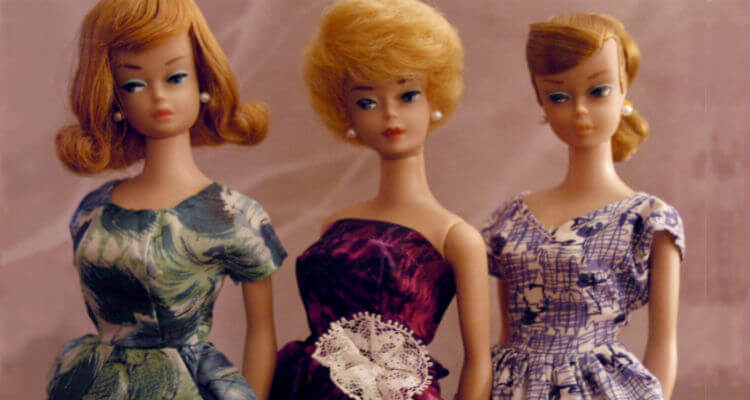
The old, and unquestionably correct, maxim that it’s important to love yourself recently got a rather odd twist when Promobot, a Russian-based robotics firm, announced that they’re offering a brand new service: creating artificial copies of anyone—including yourself.
Here’s the thing, while they’ve garnered a decent share of attention with this provocative announcement, the evidence of them actually being able to pull off this level of sophisticated engineering is, being blunt about it, rather dubious.
But even so, they do raise an interesting question that so far hasn’t been addressed often by those considering the impact of artificial beings on human sexuality.
In essence, will loving yourself go from self-affirmation to becoming a new form of sexual expression?
Promobot

But before we get into that, let’s touch base on why Promobot’s claims should be taken with more than a few grains of sodium chloride—to be cute about it.
Remember that story that circulated some time ago about a robot that tried to escape its factory? No? Then how about that other one where a similar bot was the victim of a self-driving Tesla’s hit-and-run?
Yep, both these came straight from the folks at Promobot. Add to this their pretty flamboyant claims about their new service
According to The Daily Star, Promobot’s Chairman of the Board of Directors, Aleksei Iuzhakov, said that not only will their bots have 600 different facial expressions, giving them a convincing lifelike appearance but that, “Everyone will now be able to order a robot with any appearance—for professional or personal use.”
He went on to say that their tech won’t just be able to look like someone, in particular, but act like them as well.
We can build a linguistic model based on popular phrases of a particular person—the robot will communicate and answer questions by analysing frequent expressions of the ‘original’ and using a certain context of knowledge of this person.
Or, as Oleg Kivokurtsev, the company’s co-founder said to a Russian news outlet, their robot “is the first humanoid android in the world that not only mimics the human appearance, but is also able to integrate into business processes.”
Thisis a rather bold claim when even the most current sophisticated robots still struggle to get anywhere close to human-like responses, let alone being able to perfectly mimic a real person.
Technological achievement isn’t the only thing Promobot’s heralding, as they are planning on producing as many at ten of their robots a month, with the end result of getting a thousand in service in Russian and Europe by 2024.
That is, we say with more than a small amount of well-deserved snark, they can keep their perfect replicas from making an unauthorized departure from their facility—and/or getting creamed by a self-driving car in the process.
But what does this mean?
Putting aside the doubts about their ability to make something that can act as a convincing robotic proxy, Promobot’s statement does bring up a pretty profound question.
We already know that robots have been created to mimic celebrities, like Scarlett Johansson, so making one that’s a copy of its owner is far from an impossibility.
Which begs the question: why? One reason is the pleasure in having yourself as your lover, being able to pleasure—and be pleasured—by someone who knows you far more intimately than any partner.
Who, after all, knows you better than you?
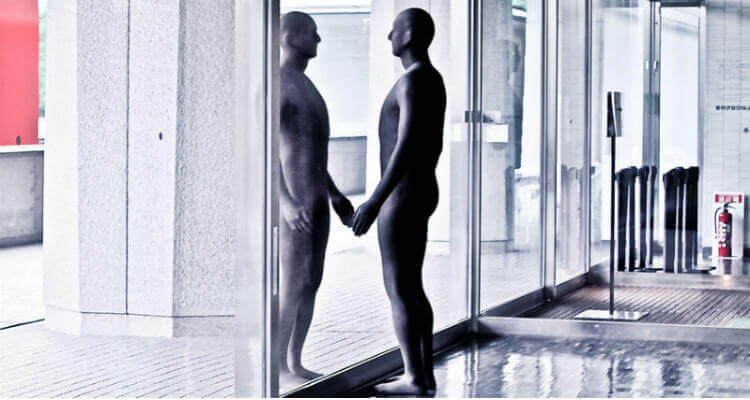
Then there the obvious narcissistic thrill of basically making love to a mirror: your own image reflected back at you.
At first this might sound a bit disturbing, creating as it does a kind of closed-loop of eroticism where other partners, and their humanity, are locked out of the equation—making a universe of nothing but self-pleasure.
But consider “loving yourself” that we opened this article with. More than just a hollow aphorism, caring for who you are, treating yourself with kindness and love, has become a well-deserved cornerstone in dealing with mental challenges.
Perhaps by building a new you those that are working with issues surrounding their appearance could be able to establish a nurturing relationship with themselves.
Seeing yourself in a new light
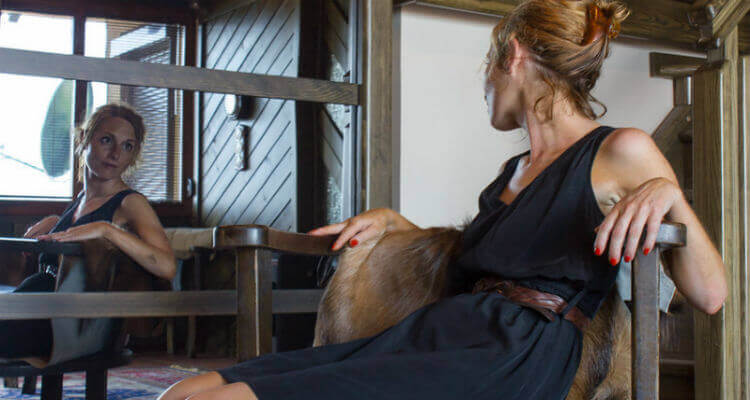
It could even become a way for those who are gender transitioning to help process the experience. By having a second version of yourself you would be able to intimately watch them go from one state to another, revealing beforehand what you, yourself, would then be undergoing.
In this way, the copy would act as a wonderfully intimate guide, one that could share what they are going through and even revealing the ultimate result of possibly gender reassignment procedures.
Again, who would know you—and what you are going through—better than yourself?
It might even be possible to make that big next step and make not just a physical copy but a mental proxy, one that perfectly mirrors your mind as well as your body. This way your doppelganger could be sent out into the world to do what you can’t do, or what you’re interested in doing but are unsure of.
The copy would then report back and share what happened and even give advice if this is something the—and here’s where things get philosophically fuzzy—the “real” you should also engage in.
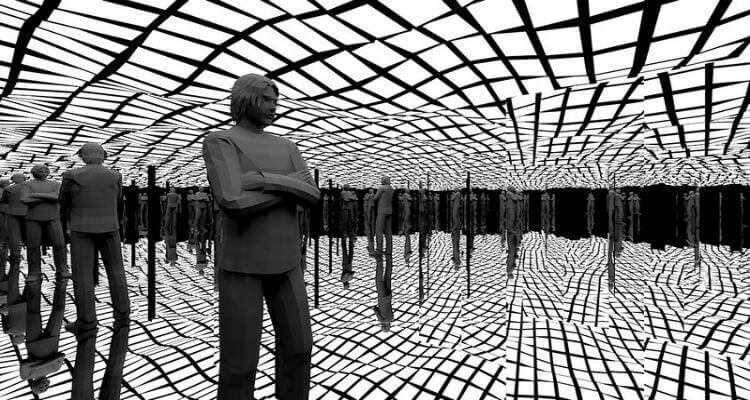
But why stop with one? If you can make a single copy, after all, then why not fill an entire house, or building, or world with yourselves—each one leading their own artificial lives stemming off from the moment their minds were duplicated from the original.
It would be like living, and interacting with, a myriad spectrum of self-possibilities: there’s the me that moved to Europe; there’s the me that likes that person as a lover; there’s the me that changed this, that, or the other about themselves—ad infinitum.
Loving yourself
Coming back to earth, while Promobot’s pitch about being able to make a robo-clone of anyone, even yourself, is pretty far-fetched, that someday something like it will actually happen is pretty much a certainty.
What that world will look like is anyone’s guess, though it’s quite fun to hypothesize about.
One thing we can say, though, is when the day comes that we can duplicate ourselves the concept of loving yourself will definitely take on a new, and fantastically erotic, meaning.
Image sources: RomitaGirl67, Ralf Scherer, KittyKaht, Raymond Zoller, Kyle McDonald