


The Pillow app gives lovers tools to rekindle passion.
The sex tech market is estimated to be worth $30 billion by 2020. Yet venture capitalists still shy away from funding startups in the space, forcing entrepreneurs to bypass traditional financing methods and get creative.
That’s why the team behind intimacy app Pillow launched an equity crowdfunding campaign on Wefunder last November. The platform makes it possible for anyone to invest and for sums as low as $100.
The goal is to raise between $110,000 and $333,0000, and in exchange for their money investors will receive future shares in the company. So far they’ve raised just over $4,000 from 13 investors.
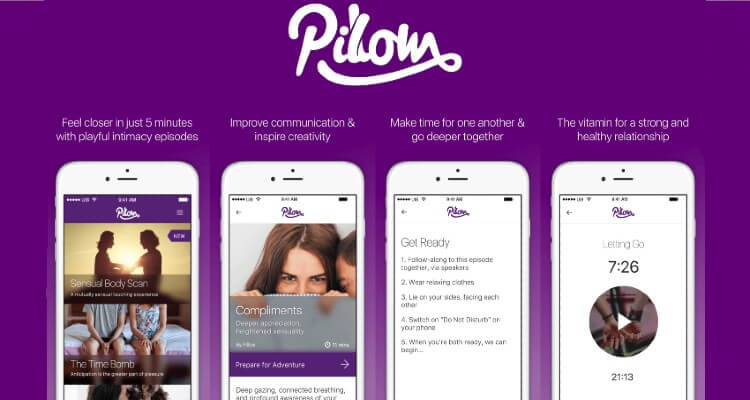
Pillow, an education platform for couples available on iOS, currently offers audio-guided exercises developed with the help of licensed therapists. With the funds the company plans to add more than 100 new exercises, grow its subscribers by 6,000, and launch on Android.
The bumpy road so far
Going on Wefunder significantly widens the funding pool beyond the wealthy accredited investors that normally shun startups.
“Having conversations with VCs is difficult and the ones we have had they’re shy about it,” Pillow founder Darren Smith told Future of Sex.
Darren recalls one particular venture capitalist saying he couldn’t get involved. Some investors from his fund based were based in the Middle East and didn’t want to touch anything even tangentially related to sex for religious reasons.
Perhaps that was true or simply a convenient excuse. For the past couple years Darren and his partners have bootstrapped Pillow, unable to lure investors in the West either.
Originally based in the UK, Pillow also ran into barriers last year when it decided to move operations to the United States.
“Silicon Valley Bank just wouldn’t touch us because they called us adult entertainment and what we’re trying to create is bringing legitimate therapy practices,” Smith said.
Sexual healing for the masses
“We expect sex to just be easy and just to happen,” says relationship and psychosexual therapist Kate Moyle. “We just expect that we shouldn’t have to work at it.”
“But we have to work at everything else in life. So why would our sex lives be any different?”
Couples in long-term relationships visit Moyle at her London office, hoping to reignite their once passionate sex lives. Also a partner at Pillow, she works with experts to make sure the audio exercises are appropriate for therapists to recommend to clients.
According to Moyle, often her clients who are experiencing sexual dysfunction don’t have a physical problem.
“What they’re dealing with is anxiety, which is causing a physical symptom. A lot of how I work with people is encouraging them to get out of their heads and into their bodies, which is essentially what the Pillow episodes also do.”
Many couples can’t afford to see therapists or find the idea of visiting one daunting. At $6.99 a month, Moyle adds that the Pillow app increases access to therapist-approved techniques. The brief episodes are likely also more enjoyable and thus more effective than knowledge gleaned from books.
Log out to get it on
Technology also holds some blame for dwindling sex drives and lost intimacy in long-term relationships. Moyle says she learned the time couples had previously spent making love was now replaced with activities such as checking their phones or watching Netflix.
“You suddenly realize that half an hour is gone and you’ve both wasted it just flicking through Instagram,” says Moyle.
“That half an hour could have been time where you were connecting and feeling intimacy with eye contact or touch or conversation or communication. And those are the foundations and the building blocks of all relationships.”
So for the love of love, sex, excitement, and passion, the Pillow team aims to turn our overdependence on technology on its head. Instead of seeing how many likes their social media post receive, lovers can open the app, relax, and get back that loving feeling.
Image sources: Pillow