



Way to ease social connections—or put users’ privacy at risk?

Addressing the recent Bloomberg Technology Summit in San Francisco, Whitney Wolfe Herd, the founder and Executive Chair of the popular dating site Bumble, speculated we might soon be able to employ artificially intelligent assistants to make finding emotionally compatible sexual partners easier.
As enticing as the prospect sounds, it also raises serious security concerns. Primarily, who would Wolfe Herd’s “AI-dating concierges” actually work for: the people using them in their search for dates or the companies who developed them?
Helping you?
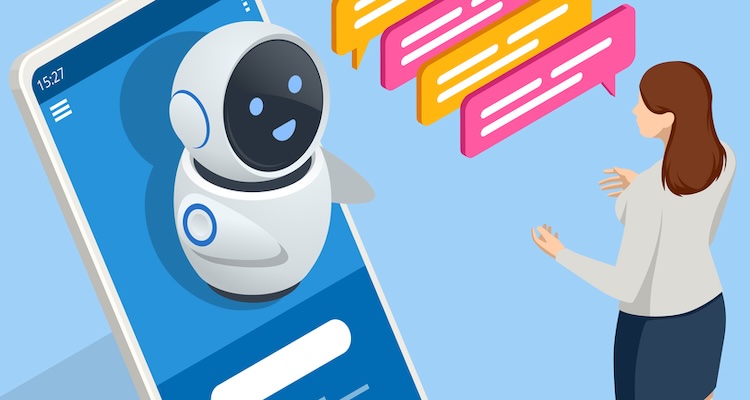
As reported by Gizmodo, Wolfe Herd described a situation where “You could, in the near future, be talking to your AI dating concierge. You could share your insecurities. There is a world where your dating concierge could go and date for you with other dating concierges.”
According to the same article, Wolfe Herd’s talk wasn’t enthusiastically received, causing her to attempt to put a more positive spin on the idea, “And then you don’t have to talk to 600 people. It could scan all of San Francisco for you and say these are the three people you really ought to meet. So that’s the power of AI if harnessed the right way.”
So, after being thoroughly trained in what you like or don’t like when it comes to companionship, your digital assistant would go forth to meet and greet other AI concierges and, in the process, take a lot of the guesswork (and expense) out of dating.
RECOMMENDED READ: Magic Moments: Unique Ways AI Might Improve Your Love Life
In fact, Bumble’s already moving somewhat in this direction with its new “Opening Move” feature, which gives female-identified users the option to select and send one of several pre-written responses rather than having to write one themselves—a task that could be handled by a built-in AI in the not-too-distant future.
Or helping them?

It’s ironic to hear Wolfe Herd advocating for artificial intelligence to be employed in “the right way,” as an increasing number of people are questioning the ethical implications of AI dating apps.
Bumble appears to be aware of this controversy. In an interview with the BBC, the company’s chief executive officer, Lidiane Jones, said, “Control and transparency are going to be a key part of how we use AI. Transparency is a primary principle of our AI product development so that users remain in control. We want people to know when AI is being used, especially if it’s for an interaction. I encourage tech leaders to drive transparency when it comes to using AI, especially with consumer experiences.”
However, what Jones and Wolfe Herd still need to address is whether companies like Bumble might intentionally or inadvertently build their AI concierges to put not only their customers but also their bottom line first.
It certainly wouldn’t be difficult to do. Not to be overly Machiavellian or to imply anything nefarious is going on, but let’s face it: Bumble and other dating apps make money by keeping their customers looking only to lose them the moment they find their match.
Personal, not corporate use?

If you share these concerns, a solution might be to bypass a potentially unethical AI-assisted dating app while taking advantage of the technology’s potential effectiveness in locating the person of your dreams.
Though, one, you’ll likely still need to put your relationship pursuits into the hands of another company—but at least one without a financial stake in your dating life—and, two, this other option isn’t currently available.
But just as AI-assisted dating systems like the one Wolfe Herd spoke of are inevitable, so is the rise of other, far more independent services.
For example, it’s not hard to imagine a next-gen personal assistant that, in addition to its many other features like planning your day, managing your workflow, or monitoring your health, would also (when asked) lend an algorithmic hand when it comes time to find someone with whom you can share your life or just have sexy fun.
True, a system like this comes with its own set of ethical issues that we’ll hopefully have worked out by then. The good news is that when we do, you won’t need to put all your dating eggs in what could be an unfortunately troublesome basket. And you won’t have to worry that a service you pay for will be tempted to keep you single and lonely.
Image Sources: Depositphotos