


Immersive adult entertainment could prove to be an effective therapeutic technique
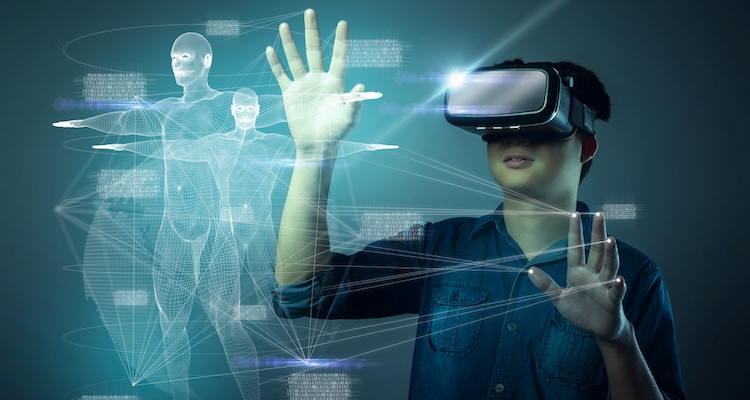
After showing a selection of explicit videos to female-identified volunteers, researchers from the University of British Columbia, Vancouver’s Department of Psychology said their subjects reported an increase in sexual anxiety when viewing 1st person, virtual reality content versus 3rd person VR content or two-dimensional erotica
These results led the team to suggest VR could contribute to a clinical treatment for sex-related anxiety and aversion, by using Virtual Reality Exposure Therapy (VERT).
Like being there
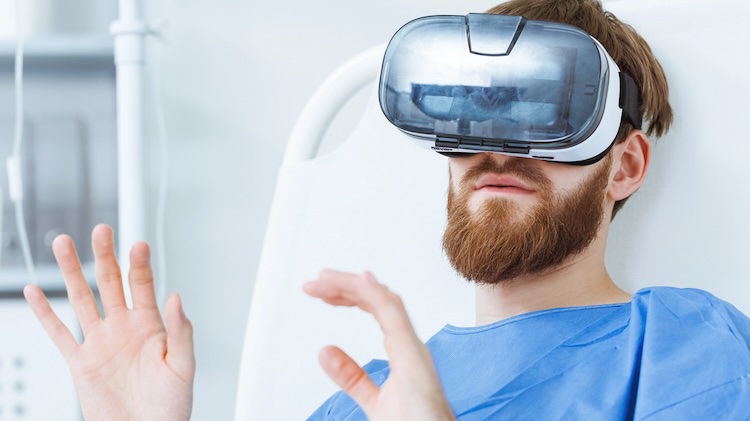
Unlike 2D imagery, where the viewer frequently feels separated from what’s depicted on screen, virtual reality creates an intense, fully engaging experience by removing everything visually related to the outside world.
While the University of British Columbia study showed that their group of thirty-eight women, comprising a non-clinical sample, “did not experience any adverse events in the short-term in response to viewing VR erotica,” however there were increases in “state-level anxiety” for all participants, particularly when exposed to first person VR erotica.
Based on this and findings of previous studies, the team suggested additional Virtual Reality Exposure Therapy (VRET) research:
While all the erotic videos (2D and VR) elicited increases in state-level anxiety in our sample, it is likely that these stimuli would elicit greater anxiety in individuals who experience fear in anticipation of or during sex. While our findings suggest that 2D and VR erotica could be used in VRET programs aiming to treat fear-based sexual dysfunction, this requires further exploration in future studies.
Without being there
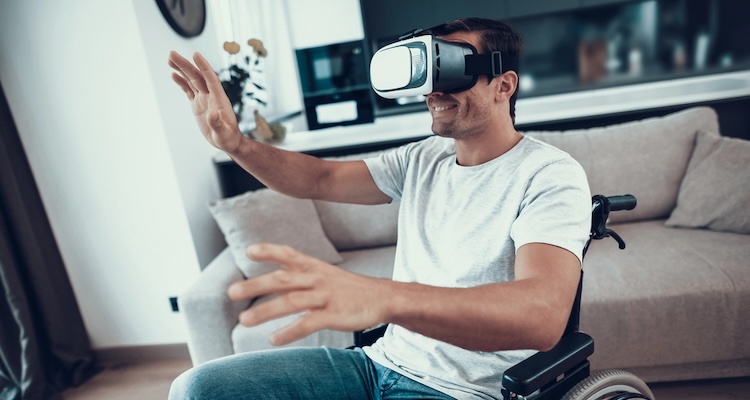
As ever-more realistic VR grows in popularity and affordability, so is research and clinical interest in employing VRET to address everything from debilitating phobias to crippling Post Traumatic Stress Disorders (PTSD).
At the heart of VRET is virtual reality’s ability to make whoever’s treated feel as if, for instance, they are standing on the edge of a cliff without really being there. This provides an opportunity for people to face their fears in a physically secur, clinically managed environment, which they can leave whenever they want.
RECOMMENDED READ: The Best Disability-Friendly Sextech
Likewise, sexuality-related VRET might involve measured doses of potentially triggering stimuli, such as standing ever closer to a digitalized likeness of whoever initiated a person’s trauma, beginning with a rough approximation before adding progressively realistic details as the subject’s anxiety dissipates over the course of treatment.
Practice makes healing—and fun!
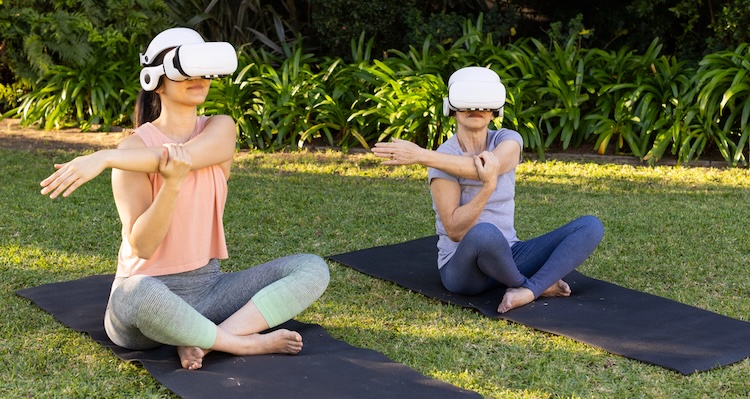
Branching off from VRET, imagine how supportive virtual reality could be when dealing with sexual self-esteem issues.
Safe within a customized virtual playspace, you’d be able to try and try again until you’re finally comfortable enough to try outside of VR.
Or perhaps you’re just interested in something but concerned about what might happen should things go really, really wrong? By trying it first in VR, you could take even your most outrageous fantasies on a test drive without frightening the horses.
Either that or maybe some erotic dreams can’t—or never should—become a reality. In this case, VR could simply provide a fulfilling sexual fantasy experience.
Nothing’s impossible—in VR
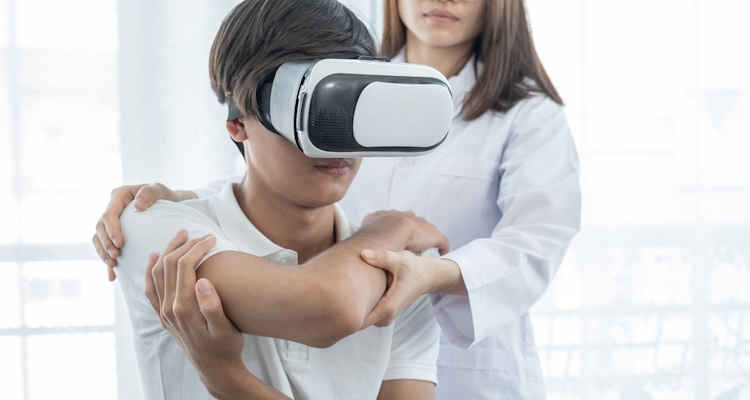
Personal trauma also isn’t the only sexuality or gender related concern VRET could be used for.
For examople, are you actually you? I mean, is the body you may have been born into your true self? If not, a variation of VRET may give you a method for manifesting your real self—as well as practicing what navigating the world post-surgery could be like.
Donning a pair of VR goggles, you could transform yourself into anyone or anything if that’s your kink.
What if your problem isn’t with who you are but rather how you view and, from there, treat other people?
What happens to bigotry when you know, down to the smallest detail, what many LGBTQIA+ people’s lives are like—or the unhoused, other ethnicities, cultures, ages, the neurodivergent, or the countless other differences that today often seems like what holds us apart us but tomorrow may, compliments of VRET, may finally unite us?
Aside from the therapeutic uses of VRET, virtual reality, with its capacity to open infinite worlds and provide limitless sexual and emotional experiences could do wonders towards humanity healing itself—or at least make us look at where we are now and how we can become better people.
Image Sources: Depositphotos