


Did teledildonics exist before 1997?
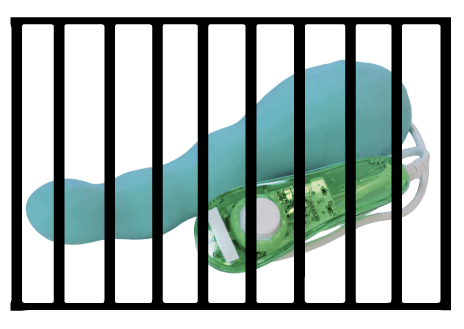 After being sued for patent infringement on July 20, open-source sex tech company Comingle is turning to the public for help building its defense case.
California company TZU Technologies claims Comingle violated its patent rights by offering a browser-based platform that controls sex devices, and also by selling computer-operated sex devices. TZU Technologies owns the U.S. patent number 6,368,268 (the ‘268 for short), which covers the communication of sex gadgets over the Internet.
Comingle is now searching for prior art dated before August 1997, which was also publicly available, that shows computer, network, or Internet-controlled sexual stimulation devices. Prior art is any evidence that shows an invention has been described before, but does not necessarily need to be commercially available or physically exist
If found, it may invalidate the ‘268 patent on the grounds that the inventor, Warren Sandvick, did not have a novel invention when he filed in 1998.
The small open-technology company based in Atlanta, Georgia, also started an Indiegogo campaign this week to collect donations to cover legal fees. Lawyer friends have told the company that showing up to court in California could cost $10,000, and that patent lawsuits usually rake up legal fees of between $300,000 and $500,000. In three days, Comingle has raised almost $500.
So far Comingle’s Twitter page says they’ve found “tons” of prior art, including a video showing a 1993 telepresence sex experiment called CyberSM. Wearing simulator suits, a person in France transmitted touch back and forth between someone in Germany with the push of a button.
The video below is NOT SAFE FOR WORK.
Wow! we have been getting TONS of prior art against the #teledildonics #patenttroll but this is so awesome + so 1993 https://t.co/0WVpfiLysD
— Comingle (@comingle_io) July 27, 2015
Orgasmatronics CEO Dr. X. Treme, who’s been open about his disdain for patents, particularly the ‘268, told Future of Sex there may also be prior art in old issues of Mondo 2000, a now-defunct cyber culture magazine.
Currently, Comingle is seeking legal advice on how to proceed next. The company is also reaching out to other defendants named in the TZU Technologies lawsuits to potentially build a coalition defense.
We will provide updates to the story as they develop.
Image source: Comingle








We hope something can be found because hopefully this would set a new precedence to the joke that is the recent patents surrounding teledildonics / cyberdildonics which could potentially stagnate the industry from organic evolution as companies are unable to create profitable products while other firms have bought up all of the patents.