


Airlifted birth control to those in need.
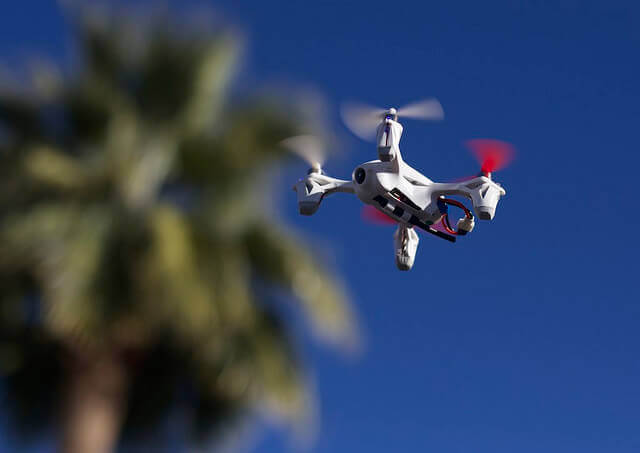
We blast them, we train hawks to knock them out of the sky, we use nets to engulf them, we jam their electronics—suffice it to say that we are still dealing with growing presence of Unmanned Aerial Vehicles (UAVs).
In other words: drones.
With many companies working on using them for everything from delivering pizzas to shipping your online purchase, it’s easy to forget that they can also be an invaluable life-saving tool.
In fact, they have already become almost essential in disaster relief, a critical tool for inspecting infrastructure, a great way to monitor agriculture, and a valuable resource for law enforcement.
Recently, drones have also been used for a more special purpose: delivering condoms and birth control pills.
Getting it where it’s needed most
And when care agencies do find ways to get through, their priorities are to things like food, potable water, and antibiotics. This is absolutely well and good, but it also means that quality of life services often are pushed aside.Treacherous geography, political instability, financially impossible: for much of the world, access to essential medications is either extraordinarily difficult or completely unattainable.
Back in 2014, philanthropists, doctors, and healthcare experts were scratching their heads over this very same problem—and came up with an elegant technological solution: drones.
“They can rapidly deliver supplies that are about to run out. They might also prove useful in places where there is no ground transport,” said Dr. Renee Van de Weerdt, Senior Technical Adviser of Reproductive Health Commodities at the United Nations Population Fund (UNFPA).
[quote type=”center”]Delivery to the rural areas used to take two days. It will now take 30 minutes.[/quote]
Out of this came Dr. One, a health system delivery system that relies on small drones to improve the lives of people in developing countries”). Funded by the Dutch government and UNFPA, Dr. One began with trials in Ghana and has since widened to include six other African countries.
During these first trials, a drone was able to transport about 4.5 pounds of medical supplies, including birth control pills and condoms.
“Delivery to the rural areas used to take two days. It will now take 30 minutes,” UNFPA’s South African public health specialist Kanyanta Sunkutu said in The Huffington Post.
Not only is accessibility a major benefit of using drones, but there’s a financial benefit was well, as a delivery only costs $15 per shipment.
Help from above
The resistance we thought we would get has not been there,” Sunkutu added.Even though Dr. One and UNFPA were initially concerned about the perception of drones—especially considering their frequent military use, as well as their cargo of birth control materials—the program has very well received.
So positively received that countries such as Rwanda, Ethiopia, Tanzania, Zambia, and others offered to not only take charge of the Dr. One system but pay for it as well.
A few obstacles to overcome
While there has been surprising governmental and community support, and for the most part the technological side of things is easy and off-the-shelf, that doesn’t mean that the program doesn’t have more than a few difficulties to deal with.
One of the largest is education. After all, getting birth control devices and drugs to a community is one thing, explaining their use is quite another.
Speaking to NPR, Rosalijn Both, who has done work on contraception in Africa, lays out the issue:
“If contraceptives and other reproductive health commodities are simply dropped in remote areas without health education materials in the local language, I would be surprised if the impact would be big.”
The sky’s the limit
Yet the promise of Dr. One, as well as extrapolating drone shipments to other regions and countries, has proven to be more than solid.
The program even shows potential for being useful in everything from bringing “…ballots after elections, or exams for school,” Sunkutu added. “It becomes a logistics management solution for hard-to-reach areas. We’re going to use family planning as an entry and make it sustainable.”
Despite our current growing pains with the idea of drones, it’s important—as with all technological innovations—to try to keep an eye on the concerns but also stay open to the benefits.
They might be annoying to some, or even scary, but without a doubt drones are bringing contraceptives and healthcare support to people who otherwise wouldn’t have access—and, in the future, may even do the same to millions more.
Image sources: Andrew Turner







That is a great interception by a drone sexbot