



Affordable, flexible, inclusive—and customizable!

Do even a brief search on what the next few decades might bring to human sexuality. More than likely you’ll get articles on virtual reality, augmented reality, genetic engineering, implants—and lots and lots and lots on sex robots.
This is hardly surprising as there have been incredible developments on that front: from 3D printed bodies to new innovations in artificial intelligence, robots have been making some serious technological leaps.
Then there’s the social attention they’ve been getting. You know a subject is stuck in the public consciousness when you have sexbot brothels opening all over the world and artificial lovers becoming an entertainment mainstay.
But are robots really the future of sex? And if they aren’t, then what is?
The pros and cons of sexbots
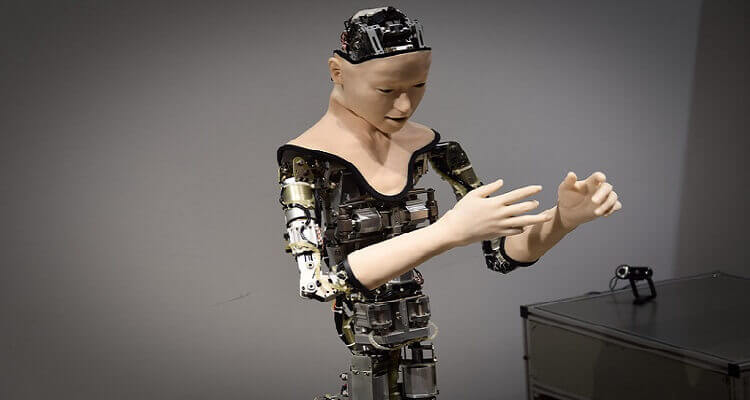
Putting aside the ongoing debate about creating, and enjoying, a sexbot for the moment—their appeal is pretty obvious.
After all, robots are relatable: they look, sound, and move if not realistically lifelike then pretty close to it—and getting better and better every year. This means that, for most people, going from a human lover to an artificial one isn’t that jarring of a transition.
They are also pretty customizable, giving their owners the opportunity to often tweak and adjust them into whatever human-shaped form they might find arousing.
In the negative column, robots are expensive. Often costing as much as a mid-range car, this puts them way out of the reach of most consumers. This also explains why so many brothels featuring them have popped up: giving average people a chance to try out these high-end products.
There’s also the plus that’s also a drawback. Being based on the human shape, a lot of their sexual technology has to be crammed into frequently far-too-small spaces—or limited in function because of the desire to make their genitalia as realistic as possible.
A future of wearables and soft technology
Dr. Kate Devlin has some very interesting thoughts on why these and other negatives show that robots may not be the real future of human sexuality.
Speaking to Dazed, the author of Turned On: Science, Sex and Robots and Professor at King’s College London, says sexbots today are not mass produced on a big enough scale to make them affordable.
So according to Devlin, most people will instead opt to find their pleasure elsewhere:
“I see much more scope for immersive intimate experiences, or responsive materials providing sensuous feedback. AI companions also seem much more realistic than robot ones (and) soft robotics—flexible, elastic controllable materials—could mean sex toys that move of their own accord.”
Soft robotics definitely brings more to the sexual table when it comes to outright sensuality. Often powered by hydraulics or mnemonic plastics, they move much more organically as opposed to the too-common jerkiness of servos found in current robots.
Plus, being free of looking and acting like the human body they can reach a far greater range of possible sensual contacts. Beyond the mechanisms necessary for movement they can look like anything—and everything.
Any shape you desire

This fluidity of shape and pleasure brings another added bonus. As Devlin puts it, wearables could also free sex tech from a limited, heteronormative focus. It could allow for more inclusivity and satisfying erotic flexibility.
Then there’s the way that wearables could interact with us. By monitoring our bodies, for example, they could automatically respond with the most effective way to maximize our pleasure. Devlin says:
“We might not have to explicitly and directly control devices with our hands. This widens the market to include technologies for all sorts of bodies and all sorts of commands: gesture, voice, muscle movement. Making technology accessible tends to benefit everyone in terms of user experience.”
A tool for intimacy and self-discovery
But personal pleasure isn’t the only benefit to wearable tech: as it looks nothing like a real human being, it neatly bypasses many of the social issues around robots—becoming not a replacement or competition but a way of enhancing sexual pleasure.
“We can use sex technology to connect people over long distances, to promote sensuality, to explore pleasure, and to provide intimacy where it is needed,” Devlin adds.
Beyond robots

More than likely we’ll see robots becoming more and more popular, as a feature of brothels and through personal models.
But they may not be the real future of sexual pleasure and growth, that lurking in their familiarity of shape and function is a trap that ends up limiting our erotic imaginations.
Through wearable, soft technology we could be released from the confines of thinking that sex can only be a mirror of our physical forms and open new vistas of pleasure.
As Devlin says, then human sexuality will become “Whatever you can imagine!”
Image sources: V2 Test_Lab: Intimate Interfaces, Raita Futo, Oak Ridge National Laboratory, Studio Roosegaarde