


Sex tech could look so good in the future that no one will know you are wearing it.
Back in 2013, Fundawear caused quite a stir. A video of an attractive young couple wearing theses vibrating underpants hit the net, and has since racked up more than 7 million views on YouTube.
Maybe it was the models’ incredibly toned and tanned bodies. Maybe it was the delighted and nervous squeals of excitement that came from their mouths. Or maybe it was just the deceptively normal, yet sexy, underwear they wore during the intimate video chat.
In the end, the promotional campaign by condom manufacturer Durex prompted 55,000 requests to own the smartphone-operated lingerie and briefs.
Billie Whitehouse, the designer of Fundawear and founder of tech company Wearable Experiments, is convinced the ad’s popularity shows these remote touch undies really do work. Still, a year later, eager consumers are waiting for a product that may or may not be released for sale.
Creating Wearable Sex Tech Fashion
Although Whitehouse can’t say whether or not Fundawear will make it to the market or what prototype number her team is working on, she is working on something.
And one of the main aims is to make the underwear as comfortable and attractive as garments sold in regular clothing stores.
“What we really want to focus on is the tech needs to be invisible. It needs to feel and look like you were just wearing a normal bra,” Whitehouse told Future of Sex.
Since last year, she’s been refining the product to make it more wearable — a process that’s been greatly enhanced by the fast rate of progress in tech.
The circuitry as well as the batteries have already halved in size.
“The technology improves every three months, and we’re so lucky that as things miniaturize, things become a lot easier,” she said.
How It Works
Made from bamboo spandex, an antifungal and antibacterial fabric, the first Fundawear prototype (shown in the video) comes in male and female versions.
Lined within the undergarments, the same actuators that cause vibrations in mobile phones are strategically placed to mimic the sensation of touch.
“There’s one that hits the nipple, and then it goes around the top, because it’s meant to feel like hands,” Whitehouse said of the bra’s design.
“It was really important for us to make sure that that focus was about where the fingertips would breach.”
In the bottoms, the actuators are arranged in a V-shape on the groin and rest underneath as well.
What makes Fundawear different from other wearable vibrators is its emphasis on transferring the motion of human interaction.
“It wasn’t necessarily about an intensity or vibration in one particular spot. It’s about the movement from one area of the body to another that actually feels like touch,” Whitehouse said.
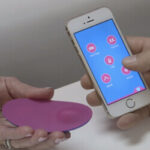
Lovers activate each other’s underwear with a smartphone app that allows them to pick which areas to caress. They can also control the intensity of the touch by pressing the screen harder or softer.
People interested in buying Fundawear will have to wait and see if it’s ever made available to the public. For now, it simply seems to be an advertising ploy, though a very successful one at that.
Would you wear a vibrating bra or underpants your lover could control over a smartphone? Let us know in the comments.
Image Source: Durex Australia