



In 25 years, will the best sex of your life be with an artificial companion?
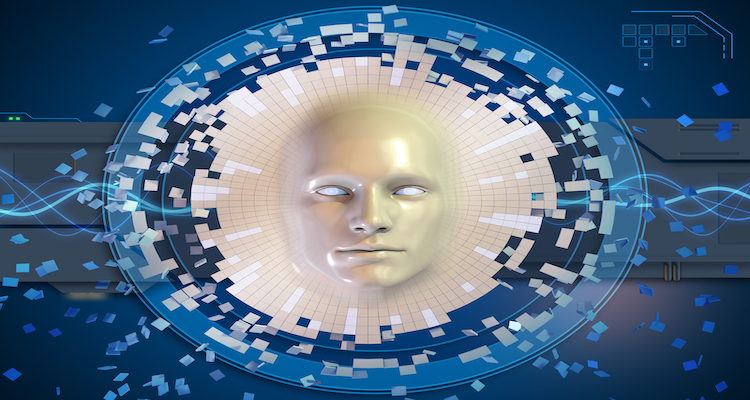
According to a recent Daily Star article, artificial companions are developing rapidly. They can already use AI to converse with their owners.
While obviously engaging in more than a little hyperbole, it also claims in 25 years, sexbots will be so realistic as to be indistinguishable from humans. As the article says, to where they’ll “give you the best sex of your life.”
But are sexbots capable of such realism already on their way?
Are lifelike sexbots coming too soon?

People have been talking about technology replacing humans since the Industrial Revolution. According to Manufacturing and Logistics IT, while some jobs have been lost to artificial intelligence, they are usually tasks that require precise, repetitive actions. I don’t know about you, but I don’t consider my sex life in any way, shape, or form to be mechanical.
When I was a kid, I watched The Jetsons on television. The vision of the future included Rosie the Robot, who functioned as a caregiver, nanny, and housekeeper for the Jetson family.
So, I naturally inferred that by the time I was an adult, the future would look like robots, flying cars, and other incredible things. I’m still waiting, so excuse me if I’m skeptical about hyper-realistic sexbots coming sooner rather than later.
While AI is still widely unregulated, the official alarm drumbeats seem to be increasing. Companies have removed the NSFW aspects of common chatbots to avoid regulation.
President Biden’s executive order seeking to regulate the AI industry doesn’t seem to take into account the sexually explicit content that might be necessary to successfully train super lifelike artificial companions.
RECOMMENDED READING: Erotic Chatbots in the Crosshairs: The Possible Implications of Biden’s AI Executive Order
It certainly does not protect the end user from unwanted modifications to their artificial companion’s programming, like AI subscription systems currently being sold by sexbot manufacturers like RealDoll.
Overreaching government regulations would clearly have a chilling effect on the use of machine learning to mimic human behavior–in turn, making it difficult for small, innovative sexbot manufacturers by making it more difficult for them to use AI to train their products.
On a side note, even if lifelike sexbots are successfully developed, I would want to have a contract with the company requiring them not to modify my bot’s NSFW aspects without my permission or risk losing what I loved about my artificial companion in a keystroke. That is to say, users need more power over their AI companions, though it seems like that’s not how things are shaping up.
Would a hyper-realistic sexbot be so bad?
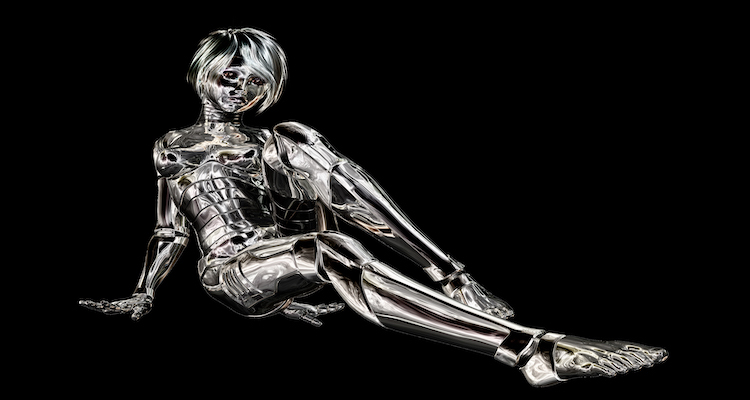
Assuming that robotics races ahead as fast as the Daily Star claims, I don’t see a problem with hyper-realistic sexbots. If someone enjoys sex dolls and can afford them, there is no reason for them not to get one.
Even now, the top-of-the-line sex dolls retail for over $7,000. With that in mind, it is likely that a robot capable of having sex better than a human would be out of reach for most people for several years after being fully developed. So, most of us will still need a human for sex for the foreseeable future–at least for some things.
Sex toys have been around for a long time. For example, a 2,000-year-old phallus scientists think was used as a dildo was found in Britain. Meanwhile, German researchers have a stone one that’s approximately 28,000 years old.
I’m sure more than a few ancient Romans complained about sex toys overshadowing sex between humans—which, as we now know, hasn’t happened.
Why the constant hand-wringing over AI-powered sex dolls? I argue it isn’t sexbots that are the problem. It’s the sex part.
Apparently, some people want to regulate sex according to their various beliefs. Fortunately, so far, at least, the sex-positive movement has managed to claw back many of our sexual rights which were threatened by those who view anything related to healthy, enjoyable sex as somehow bad. As long as we work toward a sex-positive regulatory environment for AI, the prospect of hyper-realistic sexbots remains–even if the technology takes longer than 25 years.
Image sources: Depositphotos